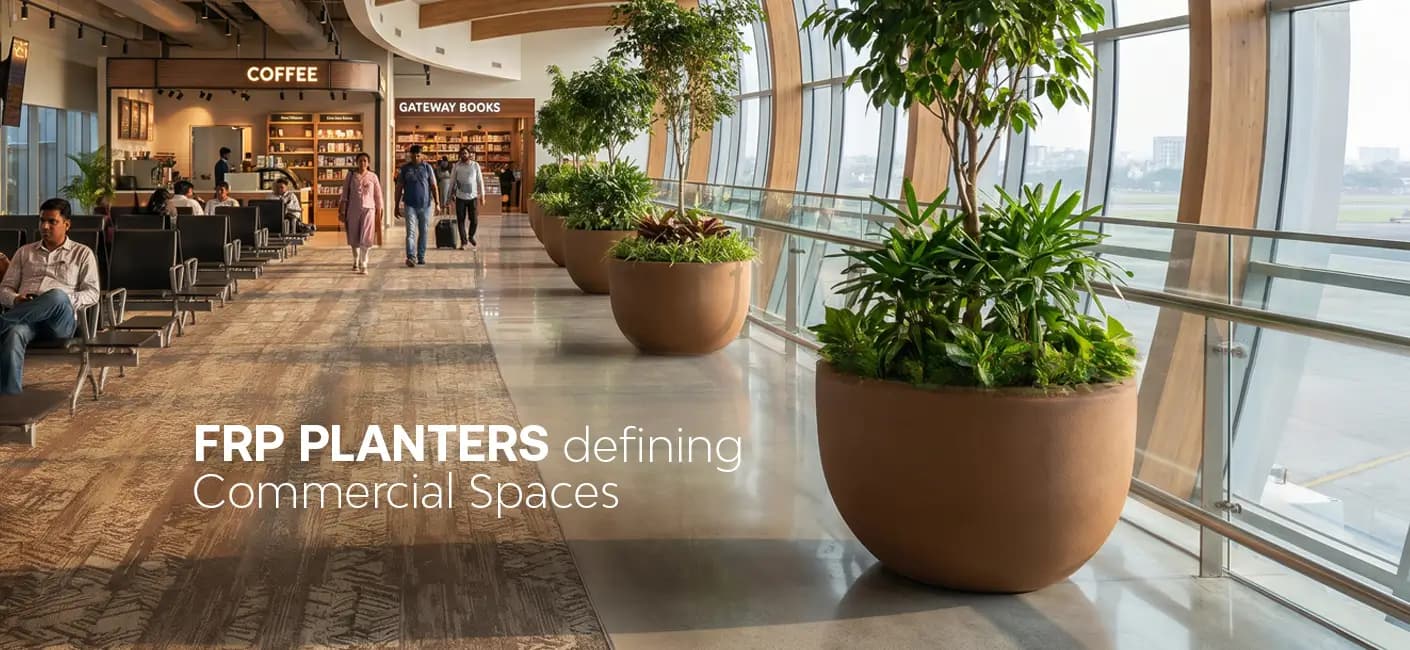
What Makes FRP Different?
1. Lightweight Without Compromising on Design
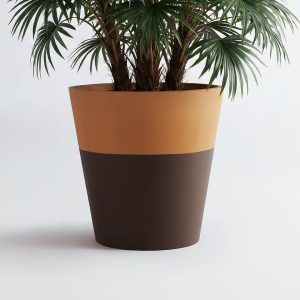
One of the biggest advantages of FRP is its relatively low weight compared to concrete and stone.
This makes FRP Planters easier to transport and handle, particularly when a project involves multiple planters or installations on elevated floors.
For terraces, balconies, and rooftop gardens, reducing the weight of the planters can be an important consideration. Structural load requirements should still be assessed for the specific building and installation.
2. Made for Different Environments
Commercial planters are used in a variety of settings, from sheltered indoor spaces to open terraces and outdoor courtyards.
FRP offers useful resistance to moisture and corrosion, making it suitable for many indoor and outdoor applications. The performance of the planter’s finish also matters, particularly where it is exposed to direct sunlight and changing weather conditions.
For spaces such as hotel poolside areas, coastal properties, and outdoor dining zones, choosing the right material and finish can help maintain the planter’s appearance over time.
3. Easier to Install
Moving and installing large concrete or stone planters can require additional labour and equipment.
FRP Planters offer a lighter alternative, which can simplify handling and installation. This is particularly useful for commercial projects with multiple planting areas or tight installation schedules.
For hotels, offices and retail spaces, where landscaping often needs to be coordinated with other work, practical installation can make the process easier.
4. More Freedom with Shapes and Finishes
Concrete and stone have a distinctive visual appeal, but FRP offers greater flexibility when it comes to creating different shapes, proportions and finishes.
From clean cylindrical forms to sculptural silhouettes, FRP Planters can complement a wide range of architectural styles. Colours, textures and finishes can also be selected to work with the existing design palette.
This gives architects, designers and landscape professionals more room to create a consistent look across different areas of a project.
5. Practical for Long-Term Use
Commercial spaces see regular activity, cleaning, and plant maintenance. The materials used in these spaces need to suit those everyday demands.
Well-made FRP Planters with appropriate finishes can offer a practical balance of durability and manageable maintenance. Their long-term performance will depend on the product specification, installation, finish, and exposure conditions.
Choosing the right planter from the beginning can help reduce avoidable maintenance and replacement work.
FRP vs Concrete vs Stone: What Should You Consider?
| Feature | FRP | Concrete | Stone |
|---|---|---|---|
| Weight | Relatively light-weight | Heavy | Usually very heavy |
| Handling & Installation | Easier to move and position | Often needs more labour or equipment | Can require specialised handling |
| Design Flexibility | Wide range of shapes, colors and finishes | Flexible, but complex forms can be costly | Depends on the type of stone and fabrication |
| Outdoor Suitability | Depends on material specification and finish | Depends on mix, construction and exposure | Depends on stone type and finish |
| Maintenance | Generally manageable with the right finish | May require repairs or surface treatment | May require cleaning or sealing |
| Best Suited For | Projects needing design flexibility and easier handling | Permanent installations where weight is suitable | Projects seeking a natural stone appearance and substantial form |
No single material that works best for every project. The right choice depends on the location, design, installation requirements, and expected use.
Where FRP Planters Work Well
- Rooftops and Terraces: When planning greenery on elevated levels, weight matters. FRP Planters offer a lighter alternative to concrete and stone, subject to the building’s structural requirements.
- Hotels and Hospitality Spaces: Hotel entrances, courtyards, poolside areas and outdoor dining spaces often need planters that complement the property’s overall design. A consistent selection of shapes, sizes and finishes can help create a connected look throughout the space.
- Offices and Commercial Buildings: Planters can soften entrances, bring greenery into shared spaces, and help define seating or circulation areas. FRP makes it easier to explore different forms while maintaining a consistent design language.
- Retail and Public Spaces: In retail environments and other commercial settings, planters can guide movement, frame entrances, and introduce greenery without making the space feel crowded. The right combination of size, placement, and finish helps them work with the surrounding architecture.
Choosing Planters for Commercial Projects
Before selecting planters for a commercial installation, consider a few practical details:
- Location: Will the planters be used indoors, outdoors, or across both?
- Size and weight: Are they suitable for the installation area and its structural requirements?
- Plant requirements: Is there enough room for the plant’s roots, and is drainage properly addressed?
- Design: Do the shapes, colours and finishes complement the architecture?
- Maintenance: Will the planters be practical to clean and maintain?
- Consistency: Can the same design language be carried across different parts of the project?
Working with an experienced planter manufacturer can help bring these considerations together and make selection easier.
Why Bonasila for Commercial Planter Requirements?
At Bonasila, we look at planters as part of the spaces they inhabit.
Our FRP planter range offers different forms, sizes, colours and finishes for residential, hospitality and commercial applications. Whether the requirement is for a hotel entrance, an office terrace or a larger landscape, the aim is to find planters that work with both the greenery and the surrounding design.
Commercial planters need to do more than look good in isolation. They need to make sense within the larger space.
Final Thoughts
Choosing planters for a commercial space involves more than picking a material that looks good.
Weight, installation, maintenance, finish, and design flexibility all play a role in how well the planters work within the project.
Concrete and stone remain valuable choices for many applications. But where easier handling, varied forms, and a coordinated design are priorities, FRP Planters offer a practical alternative.
At Bonasila, we believe the right planter should work with the plant, complement the architecture, and feel at home in its surroundings.
Because when the details come together, even a planter can make a space feel more complete.
FAQs
Q1. Why are FRP Planters suitable for commercial projects?
Ans. FRP Planters offer a combination of relatively low weight, design flexibility, and suitability for many indoor and outdoor applications. They are useful for projects that require multiple planter sizes and finishes.
Q2. Are FRP Planters better than concrete planters?
Ans. It depends on the application. FRP is generally easier to handle and offers greater flexibility in shapes and finishes, while concrete may be preferred where substantial weight and a solid, permanent form are suitable.
Q3. Can FRP Planters be used on rooftops and terraces?
Ans. Yes. Their relatively low weight makes them a useful option for elevated spaces. However, the building’s structural capacity, planter dimensions, soil and plant weight, and water load must all be considered.
Q4. What should you consider when selecting Planters for commercial projects?
Ans. Consider the location, plant requirements, size, weight, drainage, finish, maintenance needs, and how the planters will work with the overall design.
Q5. Can FRP Planters be customised to suit a commercial space?
Ans. FRP allows flexibility in shapes, sizes, colours and finishes, depending on the manufacturer’s range and capabilities. This can help create a consistent look across different areas of a project.