
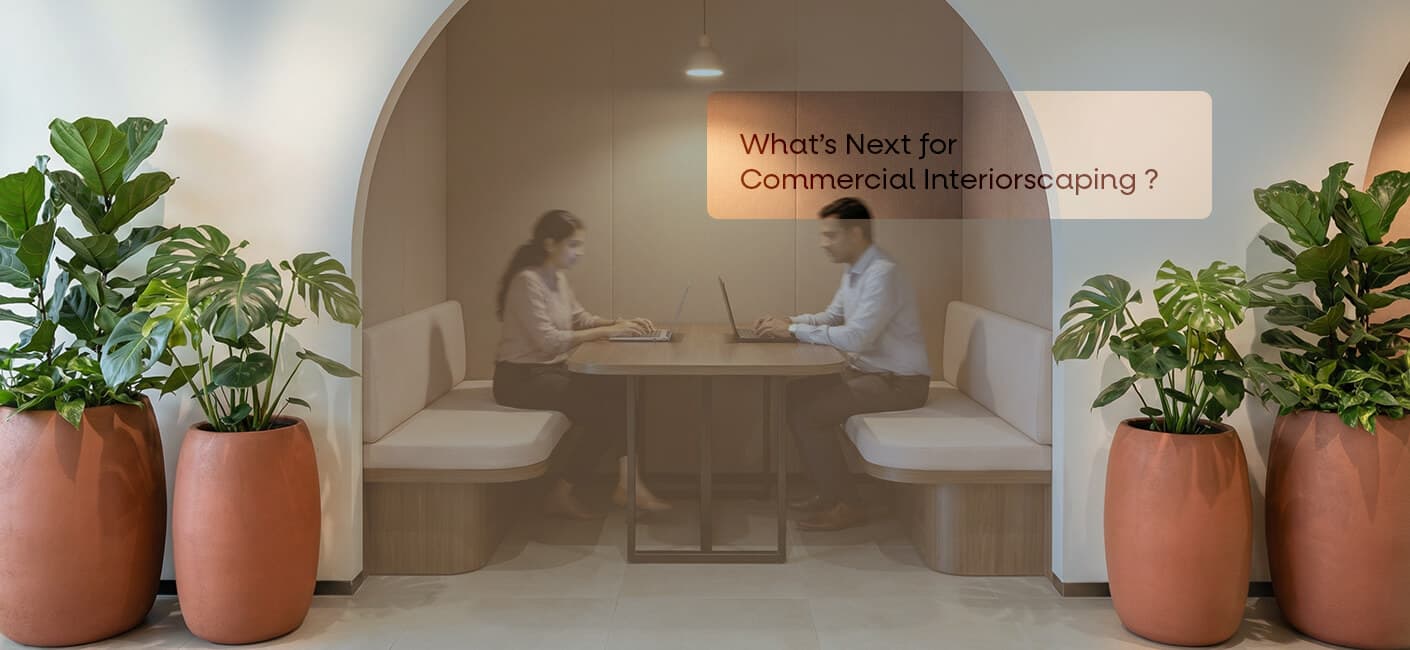
Commercial Interiorscaping Key Trends & Insights
1. Biophilic Design Becomes a Business Standard
Biophilic design is no longer a luxury trend. It is becoming a necessity.
Research consistently shows that access to greenery improves employee productivity, reduces stress, and enhances customer experience.
Offices with plants report better engagement levels, while hospitality spaces feel more welcoming and memorable.
This shift means interiorscaping is now part of workplace wellness strategies rather than just visual styling.
2. Green Installations Over Scattered Plants
Earlier, commercial interiors often included many small pots placed randomly. The new approach focuses on intentional impact.
Examples include:
• Large entrance planters
• Feature plant walls
• Statement trees in reception areas
• Clustered designer planters creating visual zones
Fewer but thoughtfully placed elements create stronger design identity while reducing maintenance complexity.
3. Lightweight and Durable Materials Take Priority
Commercial environments demand practicality along with aesthetics. Heavy ceramic or stone planters can create logistical challenges, especially in high-rise buildings or frequently redesigned spaces.
This is where FRP pots are becoming increasingly popular.
FRP (Fiber Reinforced Polymer) offers:
• Lightweight handling
• High durability
• Weather resistance for indoor and semi-outdoor use
• Long lifespan with minimal maintenance
• Premium finishes suitable for modern interiors
Businesses are recognising that investing once in quality FRP pots reduces replacement costs and operational effort over time.
4. Designer Planters as Part of Brand Identity

Planters are no longer neutral containers. They are becoming brand elements.
Modern commercial interiors often select designer planters that align with:
• Brand colours
• Architectural style
• Corporate personality
• Customer experience goals
For example, sleek matte finishes support minimal corporate offices, while textured finishes work well for hospitality or lifestyle retail environments.
This integration of greenery with brand storytelling is expected to grow significantly.
5. Flexible and Modular Interiorscaping
Commercial spaces change frequently. Layouts evolve, departments expand, and branding refreshes happen.
Future interiorscaping solutions are moving toward modular systems:
• Movable planters for zoning spaces
• Divider planters replacing partitions
• Flexible plant clusters for events or seasonal décor
• Multi-purpose designer planters for indoor and outdoor transitions
This flexibility helps businesses adapt without major redesign investments.
6. Sustainability and Responsible Material Choices
Sustainability is influencing procurement decisions across industries. Interiorscaping is no exception.
Companies are prioritising:
• Long-lasting materials
• Reusable planters
• Water-efficient irrigation systems
• Low-maintenance plant species
• Locally sourced greenery
Choosing durable materials and low-maintenance plants helps reduce frequent replacements, supporting more responsible and long-term interiorscape planning.
7. Wellness-Focused Workspaces
Employee wellbeing is one of the biggest drivers of interiorscaping trends.
Future offices will likely include:
• Quiet green corners for relaxation
• Indoor garden breakout zones
• Nature-inspired meeting rooms
• Green buffers to reduce noise
Plants are increasingly seen as tools for mental wellness rather than decorative accessories.
8. Technology Integration in Plant Care
Maintenance used to be the biggest challenge in commercial interiorscaping. That is changing with smart solutions.
Emerging practices include:
• Self-watering systems
• Moisture sensors
• Automated irrigation
• Professional plant maintenance services
This allows businesses to maintain lush greenery without burdening internal teams.
9. Hospitality-Inspired Office Design
Workspaces are borrowing design ideas from hotels and cafes to create more inviting environments.
Expect to see:
• Lounge-style seating with plants
• Café corners with greenery clusters
• Warm lighting combined with designer planters
• Residential-style comfort in corporate interiors
The goal is simple: make workplaces feel more human.
10. Entrance and First-Impression Landscaping
Reception areas and entrances are becoming signature spaces.
Large designer planters with architectural plants are being used to:
• Create visual impact
• Guide movement
• Establish brand tone instantly
• Improve perceived value of the space
A strong first impression often influences how clients perceive professionalism and credibility.
Conclusion
The future of commercial interiorscaping lies at the intersection of design, wellness, and practicality.
Businesses are realising that greenery is not just decoration, it is an investment in experience, productivity, and brand perception.
Thoughtfully chosen plants, durable FRP pots, and well-designed designer planters can transform commercial spaces into environments that feel alive, welcoming, and inspiring.
As workplaces continue to evolve, interiorscaping will move from trend to essential design strategy shaping how people feel, work, and connect within built spaces.
FAQs
1. Why is interiorscaping important for commercial spaces?
It improves aesthetics, employee wellbeing, customer experience, and overall brand perception while supporting healthier indoor environments.
2. Are FRP pots suitable for offices and commercial buildings?
Yes. FRP pots are lightweight, durable, and easy to maintain, making them ideal for commercial environments where mobility and longevity matter.
3. How do designer planters benefit businesses?
Designer planters enhance brand identity, elevate space aesthetics, and create intentional visual impact rather than random decoration.
4. Do plants increase maintenance costs in offices?
Not necessarily. With proper plant selection, automated watering systems, and durable planters, maintenance can remain minimal and cost-effective.
5. What plants work best for commercial interiors?
Low-maintenance plants like snake plant, ZZ plant, ficus, areca palm, and pothos are commonly used because they adapt well to indoor conditions.
