
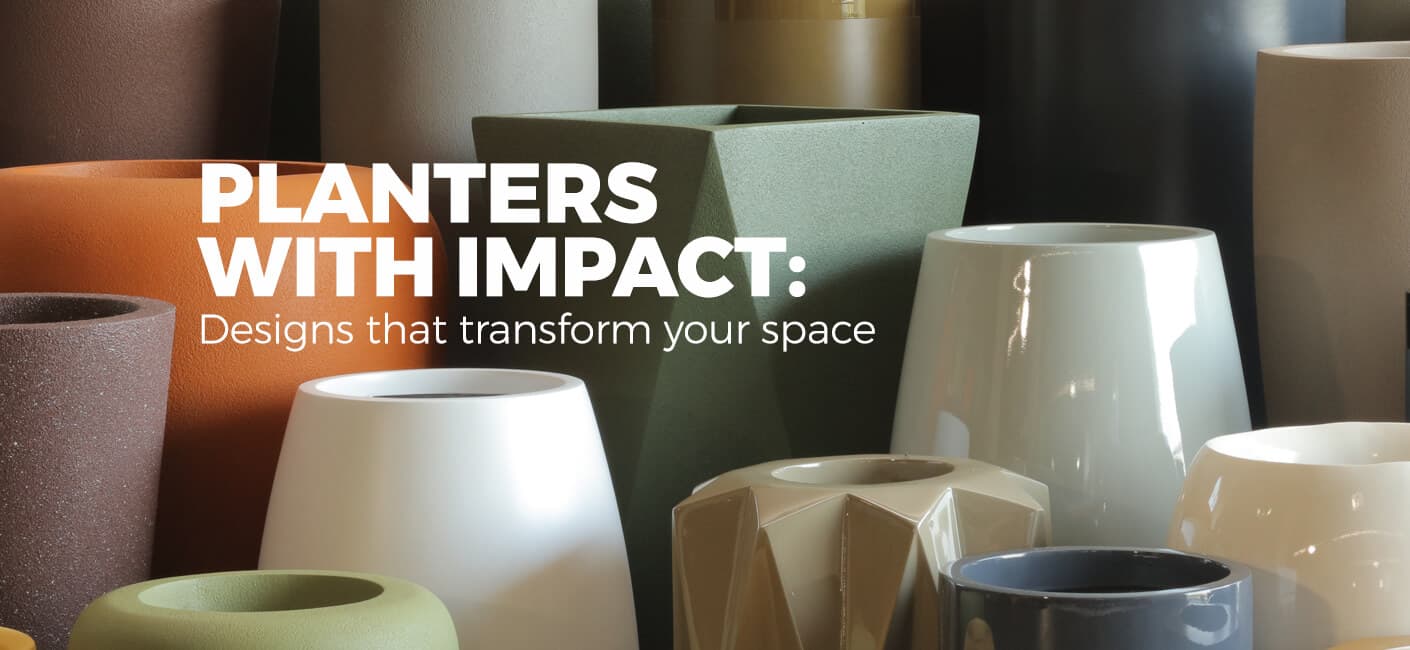
Why Planter Design Matters More Than We Realise
Plants bring life, but planters give them presence. A well-designed planter helps greenery feel intentional rather than incidental.
It anchors plants visually, aligns them with surrounding furniture, and creates rhythm across a space. Inappropriately chosen planters, on the other hand, can disrupt flow, feel cluttered, or visually shrink an otherwise beautiful setting.
Design-led planters help plants blend into the architecture instead of competing with it. This is especially important in modern homes where clean lines, open layouts, and subtle detailing take precedence.
Material Choice Sets the Tone of the Space
Material plays a quiet yet defining role in planter design. Among contemporary options, FRP planters have become increasingly relevant for modern interiors and curated outdoor areas.
FRP allows for sculptural forms, smooth finishes, and precise proportions while remaining lightweight and structurally strong.
This flexibility makes it easier to introduce statement planters without overwhelming a space or complicating movement and layout.
Brands like Bonasila use FRP to create planters that feel refined rather than industrial, allowing greenery to sit comfortably within thoughtfully designed homes, studios, and workspaces.
Planters as Design Anchors, Not Just Containers
Impactful planters often act as visual anchors. Tall planters help frame entrances, corners, and furniture groupings. Low, wide planters ground open spaces and add softness without blocking sightlines.
Compact planters introduce detail and texture on shelves, ledges, and tables. When planters are treated as part of the design language rather than standalone objects, plants feel integrated into the space.
This balance creates interiors that feel calm, layered, and intentional rather than decorative for the sake of it.
Creating Indoor–Outdoor Continuity
One of the most effective ways planters transform spaces is by creating continuity between indoors and outdoors.
Using similar planter styles across living rooms, balconies, terraces, and semi-open areas helps greenery flow naturally through the home.
FRP planters make this transition seamless due to their durability, consistent finishes, and resistance to weather changes.
Bonasila’s collections are often used across different zones of a home, allowing plants to visually connect spaces without abrupt design shifts.
The result feels cohesive and considered, even when layouts evolve.
Subtle Luxury Through Thoughtful Planter Design
In refined spaces, luxury is rarely loud. It is expressed through proportion, restraint, and material quality.
Planters that blend into their surroundings rather than demand attention often leave the strongest impression.
Clean silhouettes, balanced forms, and neutral finishes allow plants to shine while quietly enhancing the setting.
Thoughtfully designed FRP planters are frequently seen in carefully styled homes and contemporary environments where every element is chosen for harmony rather than display.
They add depth without distraction, supporting the overall atmosphere of the space.
Practical Impact: Beyond Aesthetics
Good planter design also supports practical living. Well-proportioned planters provide adequate root space, stability, and drainage, helping plants grow healthier and last longer.
Durable materials reduce frequent replacements, while lightweight construction makes rearranging spaces easier as needs change.
Practical considerations also extend to everyday challenges, such as how to get rid of ants from plant pots.
Using planters with proper drainage, avoiding water stagnation, and maintaining clean potting mix significantly reduces ant activity.
Elevating pots slightly or using neem-based solutions can help manage ants without harming plants or interiors.
Choosing Planters That Grow With Your Space
Spaces change over time. Furniture moves, plants mature, and layouts evolve. Planters that are thoughtfully designed adapt more easily to these changes.
FRP planters, in particular, maintain their finish and structure over time, allowing them to transition between rooms or even from indoor to outdoor settings without looking out of place.
This adaptability makes them a long-term design choice rather than a seasonal one.
Conclusion
Planters with impact are not about bold statements alone. They are about intention, proportion, and material choice.
When design and function come together, planters quietly transform spaces, allowing greenery to feel like a natural extension of everyday living.
With thoughtfully designed FRP planters, such as those crafted by Bonasila, plants become part of the architecture rather than an afterthought.
The result is a space that feels balanced, welcoming, and effortlessly refined.
FAQs
1. How do planters influence interior design?
Planters help define scale, balance, and flow within a space. The right design anchors plants visually and integrates greenery into the overall layout rather than treating it as an add-on.
2. Are FRP planters suitable for indoor use?
Yes. FRP planters are lightweight, durable, and available in refined finishes, making them ideal for indoor environments where both aesthetics and practicality matter.
3. How to get rid of ants from plant pots naturally?
Keep soil dry between watering, ensure proper drainage, avoid sugary residues, and use natural solutions like neem oil or cinnamon around the pot base to deter ants.
4. Can the same planters be used indoors and outdoors?
With materials like FRP, planters can transition seamlessly between indoor and outdoor spaces, maintaining consistency in design while withstanding environmental changes.
5. Do planters really impact how a space feels?
Absolutely. Well-designed planters add structure, calm, and visual rhythm, helping spaces feel more composed and thoughtfully curated.

