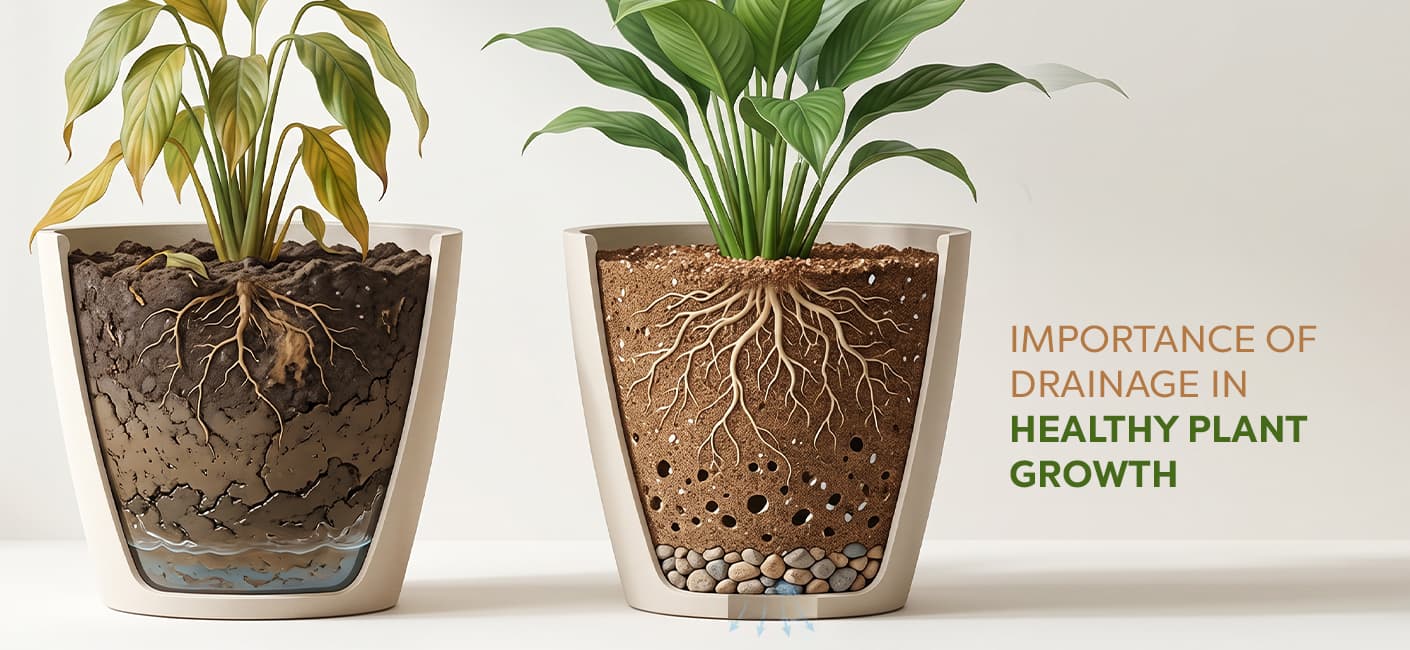
Why Is Drainage Important for Plants?

Plant roots need two things to stay healthy: water and oxygen.
When excess water remains trapped inside a planter, it pushes the air out of the soil. Without oxygen, roots cannot breathe, and over time, they begin to rot.
This is exactly why drainage is important for plants.
Good drainage allows excess water to leave the planter while ensuring the soil retains just enough moisture for healthy growth. It creates the right balance between hydration and airflow, giving roots the environment they need to flourish.
What Happens Without Proper Drainage?
Plants may not show signs immediately, but poor drainage gradually affects their overall health.
Some common problems include:
1. Root Rot
Standing water creates the perfect environment for fungi and bacteria to grow. Over time, these microorganisms attack the roots, causing them to decay.
Once root rot spreads, saving the plant becomes difficult.
2. Soil Becomes Heavy
Without proper drainage, soil stays wet for extended periods.
Instead of remaining light and airy, it becomes compact, making it harder for roots to grow and absorb nutrients.
3. Pests and Mold
Damp soil attracts unwanted guests.
Fungus gnats, mold, and mildew thrive in constantly moist conditions, making your planter an ideal breeding ground for pests.
4. Slow Growth
Yellowing leaves, drooping stems, stunted growth, and leaf drop are all common signs of excessive moisture. Many people mistake these symptoms for underwatering and end up watering the plant even more, making the problem worse.
Benefits of Proper Drainage for Plants
Healthy drainage doesn’t just prevent problems, it actively supports healthier plants.
Here’s how proper drainage for plants makes a difference.
It Prevents Root Rot
Excess water drains away before harmful fungi and bacteria have a chance to damage the roots. Healthy roots mean healthier plants.
It Improves Soil Oxygen
As water drains through the planter, fresh air naturally moves back into the soil. This allows roots to breathe, absorb nutrients more efficiently, and continue growing.
It Removes Excess Salts
Fertilizers leave behind mineral salts over time. Without drainage, these salts build up in the soil and can burn delicate roots. Proper watering combined with drainage helps flush these salts away, keeping the growing medium healthier.
How to Make Drainage for Plants
Fortunately, creating healthy drainage is simple.
If you’re wondering how to make drainage for plants, follow these easy practices.
Choose Planters with Drainage Holes
The most important step is selecting planters that have clear drainage holes at the bottom.
These openings allow excess water to escape instead of collecting around the roots.
- Use a Well-Draining Potting Mix
A heavy soil mix tends to retain water. Adding porous materials such as perlite improves airflow and allows water to pass through more easily.
- Empty Water Trays
After watering, don’t let excess water remain in saucers or overflow trays for long periods.
Emptying them shortly afterward prevents the roots from sitting in stagnant water.
- Water Only When Needed
Every plant has different watering requirements.
Rather than following a fixed schedule, check the soil first. If the top layer is still moist, it’s usually best to wait.
- Choosing the Right Planter Matters
A healthy plant starts with a healthy planter. Well-designed planters don’t just enhance the appearance of your space – they also support healthier growing conditions.
As one of the trusted Planters manufacturers, Bonasila designs FRP planters that combine aesthetics with functionality. Available in a wide variety of shapes, finishes, and sizes, Bonasila’s collection makes it easy to find the right planter for homes, offices, balconies, gardens, and commercial landscapes.
Choosing the right planter helps create the ideal environment for healthy plant growth.
A Few Extra Tips for Healthier Plants. Good drainage works even better when combined with a few simple habits.
- Choose the right planter size for your plant.
- Avoid overwatering, especially during cooler months.
- Remove dead leaves from the soil surface.
- Repot plants if the roots become overcrowded.
- Inspect drainage holes occasionally to ensure they aren’t blocked.
Small practices like these can significantly improve your plant’s long-term health.
On A Concluding Note…
Healthy plants aren’t just about sunlight and watering.
They’re about balance.
Understanding why drainage is important for plants helps you create conditions where roots can breathe, grow, and absorb nutrients effectively. With the right soil, thoughtful watering habits, and well-designed planters, your plants are far more likely to thrive.
At Bonasila, we believe beautiful planters should do more than enhance your décor; they should support healthier plants too. Because when the foundation is right, every leaf, flower, and branch has the opportunity to flourish.
FAQs
Q1. Why is drainage important for plants?
A. Drainage prevents excess water from collecting around the roots, reducing the risk of root rot and allowing roots to receive oxygen.
Q2. How can I improve drainage for plants in pots?
A. Use planters with drainage holes, choose a well-draining potting mix, add perlite if needed, and empty water trays after watering.
Q3. What are the signs of poor drainage?
A. Yellow leaves, soggy soil, slow growth, root rot, mold, and fungus gnats are common indicators of poor drainage.
Q4. Can plants survive without drainage holes?
A. While some experienced gardeners can manage plants without drainage holes, planters with proper drainage are generally the safest and healthiest choice for most plants.
Q5. Why choose Bonasila planters?
A. Bonasila offers premium FRP planters that combine thoughtful design, durability, and functionality, making them suitable for homes, offices, and commercial landscapes.