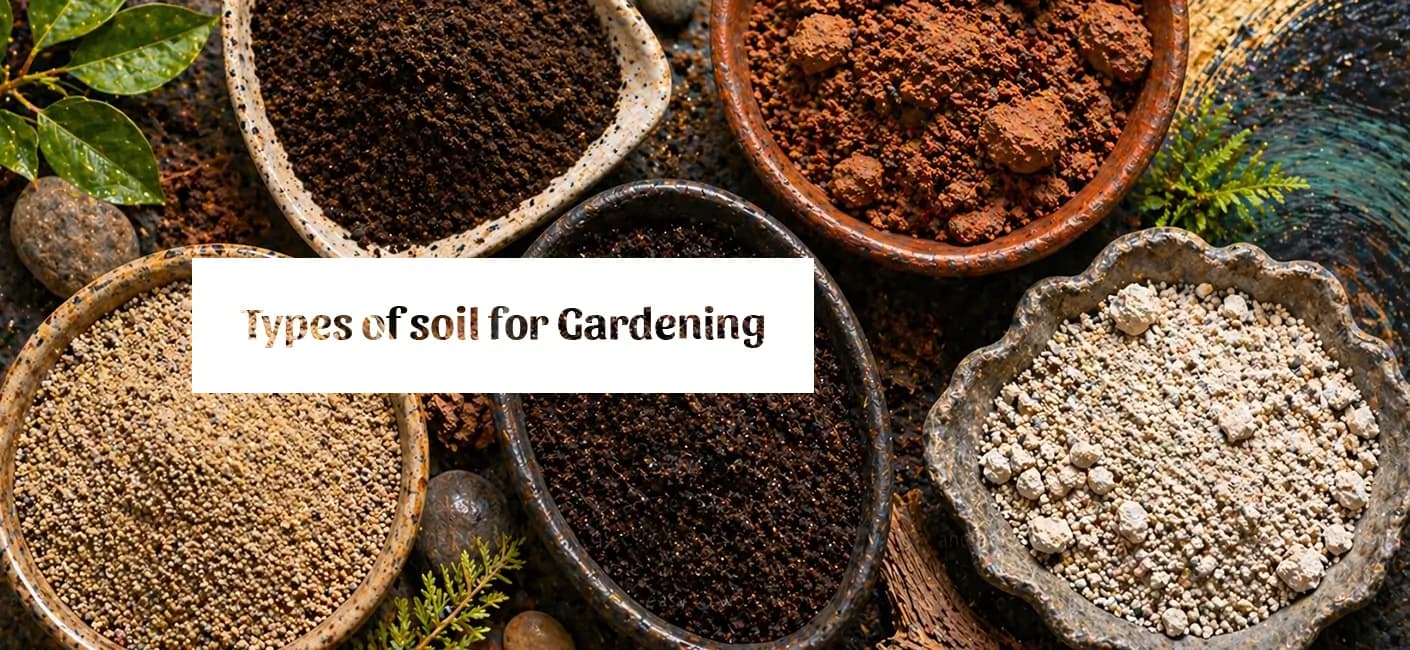
6 Types of Soil for Gardening
1. Loam Soil (The Ideal Soil)

Loam is considered the most balanced and versatile soil type. It is formed through an even mix of sand, silt, and clay, enriched with organic matter. The texture feels soft, slightly moist, and nutrient-rich.
Characteristics
- Balanced particle composition
- Fine texture with good structure
- Rich in nutrients
Advantages
- Excellent drainage with good moisture retention
- Easy to cultivate and maintain
- Supports strong root development
Best suited for
Almost all plants, including vegetables, herbs, flowers, and fruit trees. Loam works exceptionally well in FRP Planters, allowing plants to grow evenly without waterlogging.
It is often preferred when using Beautiful Planters for decorative yet functional gardening.
2. Clay Soil (The Heavy Soil)
Clay soil consists of very fine particles that are tightly packed together. It becomes sticky when wet and hard when dry, making it slightly challenging to work with.
Characteristics
- Dense and compact texture
- High nutrient retention
- Poor airflow
Advantages
- Rich in minerals
- Retains moisture effectively
Considerations
- Needs organic matter such as compost to improve aeration
- Requires proper drainage planning
Best suited for
Fruit trees, shrubs, and perennials such as asters or bergenia. When placed in Beautiful Planters, clay soil benefits from improved structure if mixed with compost or cocopeat.
FRP Planters help maintain moisture stability, preventing excessive drying.
3. Sandy Soil (The Light Soil)
Sandy soil has a gritty and grainy texture with large particles that allow water to drain quickly.
Characteristics
- Loose structure
- Quick drainage
- Warms rapidly in spring
Advantages
- Easy to cultivate
- Supports quick root growth
Considerations
- Low nutrient retention
- Requires organic matter to improve water holding capacity
Best suited for
Root vegetables such as carrots and potatoes, herbs like oregano and rosemary, and succulents.
Sandy soil works well in FRP Planters when enriched with compost, helping Beautiful Planters support plants that require well-drained conditions.
4. Silty Soil (The Fertile Soil)
Silty soil contains fine particles that feel smooth and almost soap-like in texture. It is known for high fertility and moisture retention.
Characteristics
- Soft and smooth consistency
- Holds moisture effectively
- Nutrient-rich
Advantages
- Supports consistent plant growth
- Ideal for moisture-loving plants
Considerations
- Can become compacted without proper aeration
- May require organic matter for structural balance
Best suited for
Vegetables, perennials, and moisture-loving trees such as willows.
When used in Beautiful Planters, silty soil helps maintain hydration levels, while FRP Planters provide structural durability for long-term use.
5. Peaty Soil (The Organic Soil)
Peaty soil forms from decomposed organic matter, giving it a dark and spongy appearance. It is naturally high in acidity and retains moisture effectively.
Characteristics
- Rich organic composition
- High moisture retention
- Slightly acidic nature
Advantages
•Suitable for plants requiring higher moisture levels
•Improves soil structure when blended
Considerations
- May require lime to balance pH levels
- Needs proper drainage to avoid waterlogging
Best suited for
Acid-loving plants such as azaleas, camellias, blueberries, and conifers. Peaty soil blends well with other soil types inside FRP Planters, allowing Beautiful Planters to maintain both structure and nutrient balance.
6. Chalky Soil (The Alkaline Soil)
Chalky soil is typically stony and alkaline, often containing visible limestone fragments.
Characteristics
- Free-draining structure
- Alkaline pH level
- Light texture
Advantages
- Suitable for plants that thrive in alkaline conditions
- Prevents excessive moisture retention
Considerations
- May cause nutrient deficiency in some plants
- Benefits from added organic matter
Best suited for
Lavender, lilacs, spinach, cabbage, and beets. When balanced with compost, chalky soil can perform well in Beautiful Planters, while FRP Planters help maintain structural consistency across seasons.
Which Soil is Preferable for FRP Planters?
Most plants thrive in balanced soil compositions that allow both aeration and moisture retention.
Loam soil is generally considered the most suitable choice for FRP Planters because of its stable structure and nutrient richness. However, a customised soil mix often delivers the best results.
A commonly preferred mix for Beautiful Planters includes:
- Loam soil
- Cocopeat for moisture balance
- Compost for nutrients
- Sand for drainage
This blend supports root health while allowing FRP Planters to maintain proper water flow and aeration.
Since FRP Planters are lightweight yet durable, they pair well with soil mixes that do not become overly compact or excessively waterlogged.
Beginner’s Tips for Soil Success
1. Test your soil
A simple jar test can help identify soil composition. Mixing soil with water and allowing it to settle reveals layers of sand, silt, and clay.
2. Add organic matter regularly
Compost improves almost every soil type by enhancing fertility, structure, and moisture retention.
3. Work with natural soil characteristics
Instead of changing soil completely, selecting plants suited to existing soil conditions often produces better long-term results.
When paired with Beautiful Planters, these small considerations can significantly improve plant health and overall garden aesthetics.
Understanding Soil for Better Gardening Outcomes
Understanding the different types of soil for plants helps gardeners make informed decisions about plant selection, watering frequency, and soil improvement techniques.
Soil plays a defining role in determining how plants grow, adapt, and flourish. Each soil type offers unique characteristics that influence moisture retention, nutrient availability, and aeration.
When combined thoughtfully with Beautiful Planters, the right soil composition supports both plant health and visual harmony.
The adaptability of FRP Planters makes them suitable for a wide range of soil blends, helping maintain balance across different garden settings.
Understanding soil allows gardening decisions to feel more intentional and rewarding.
Conclusion
A thriving garden begins with choosing the right foundation. By understanding the six primary soil types, gardeners can create environments where plants grow with greater resilience and vitality.
Pairing suitable soil compositions with thoughtfully selected Beautiful Planters enhances both functionality and visual appeal.
With the strength and versatility of FRP Planters, it becomes easier to experiment with soil blends that support long-term plant health.
When soil structure and planter design work together, the garden evolves into a balanced, enduring space of natural beauty.
FAQs
Q.1 Which soil type is best for beginner gardeners?
A.1 Loam soil is often recommended because it provides a balanced mix of nutrients, drainage, and moisture retention. It performs consistently well in FRP Planters and supports a wide variety of plants.
Q.2 Can soil type affect plant growth in planters?
A.2 Yes, soil structure directly impacts water retention, root development, and nutrient absorption. Choosing the right soil helps Beautiful Planters function more effectively.
Q.3 Should different plants use different soil types?
A.3 Yes, plant varieties have unique soil preferences. Succulents prefer well-drained sandy soil, while flowering plants grow well in loam or silty soil. FRP Planters support flexibility in soil selection.
Q.4 How often should soil be improved or replaced?
A.4 Adding compost periodically helps maintain nutrient balance. Over time, refreshing soil ensures Beautiful Planters continue to support healthy plant growth.